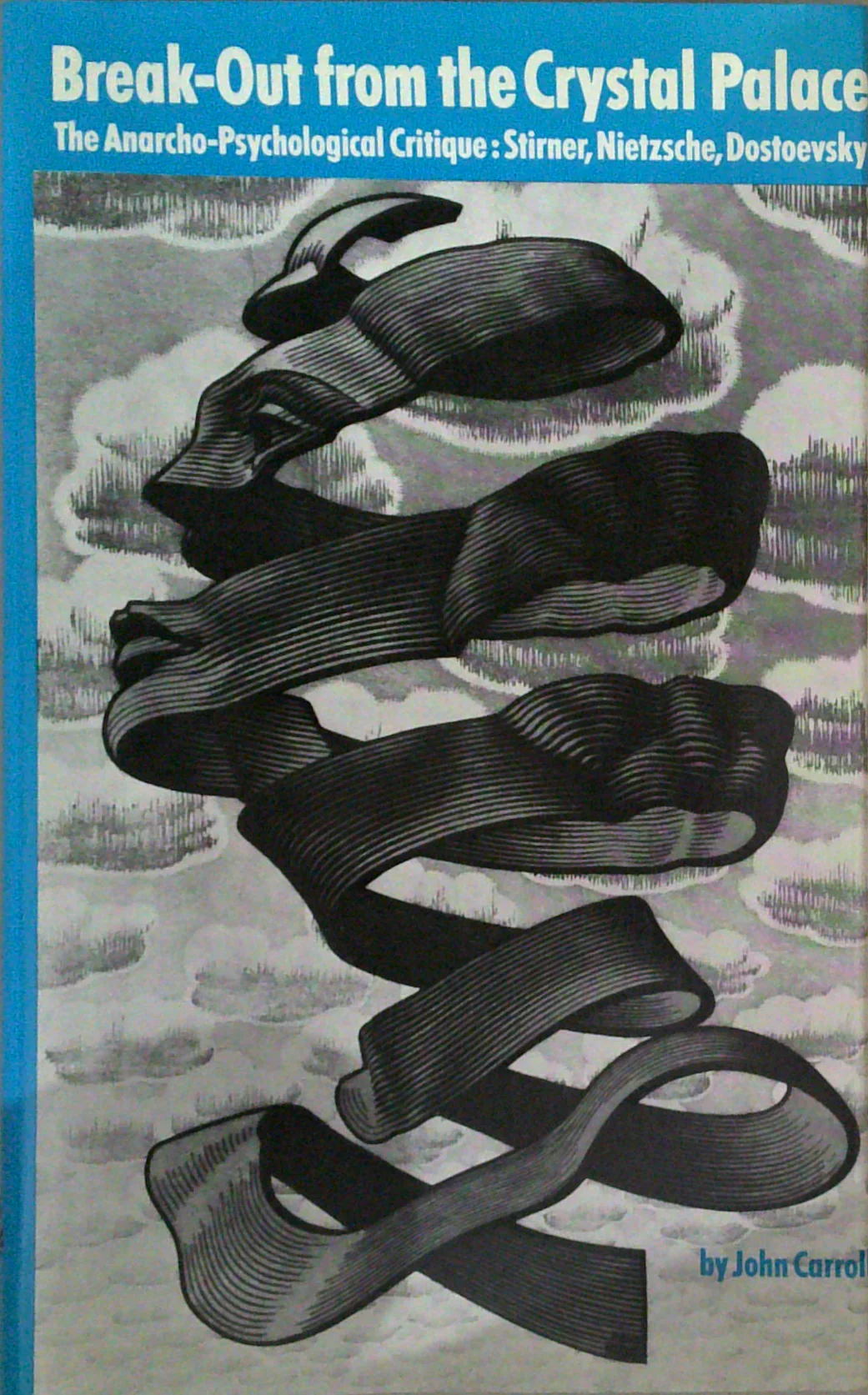
Break-Out From The Crystal Palace: The Anarcho-Psychological Critique: Stirner, Nietzsche, Dostoevsky
Break-Out From The Crystal Palace: The Anarcho-Psychological Critique: Stirner, Nietzsche, Dostoevsky
Edition: First edition
Condition remarks:
Condition: Good. Jacket: Worn but not faded - jacket still in good condition. Price cliped. Page Condition: Good. Markings: No visible markings. Binding: intact, some foxing on binding but otherwise fine. No stickers or labels clearly visible.
A compelling work of philosophical and psychological criticism, Break-Out from the Crystal Palace presents an incisive anarcho-psychological critique centred on three towering intellectual figures: Max Stirner, Friedrich Nietzsche, and Fyodor Dostoevsky. John Carroll, writing from the Department of Sociology at La Trobe University, argues that these thinkers share a radical opposition to the rationalist and conformist structures that define modern Western civilisation — what he terms the Crystal Palace. Carroll traces a lineage of rebellious thought that challenges institutional authority, moral convention, and the suffocating norms of bourgeois society. Authoritative yet provocative in tone, the work illustrates how each thinker, in their own distinct way, sought liberation from the psychological and social constraints of modernity. This is an essential text for readers engaged with continental philosophy, anarchist theory, and the intersections of literature and radical thought.
Original: $73.06
-65%$73.06
$25.57Break-Out From The Crystal Palace: The Anarcho-Psychological Critique: Stirner, Nietzsche, Dostoevsky
Edition: First edition
Condition remarks:
Condition: Good. Jacket: Worn but not faded - jacket still in good condition. Price cliped. Page Condition: Good. Markings: No visible markings. Binding: intact, some foxing on binding but otherwise fine. No stickers or labels clearly visible.
A compelling work of philosophical and psychological criticism, Break-Out from the Crystal Palace presents an incisive anarcho-psychological critique centred on three towering intellectual figures: Max Stirner, Friedrich Nietzsche, and Fyodor Dostoevsky. John Carroll, writing from the Department of Sociology at La Trobe University, argues that these thinkers share a radical opposition to the rationalist and conformist structures that define modern Western civilisation — what he terms the Crystal Palace. Carroll traces a lineage of rebellious thought that challenges institutional authority, moral convention, and the suffocating norms of bourgeois society. Authoritative yet provocative in tone, the work illustrates how each thinker, in their own distinct way, sought liberation from the psychological and social constraints of modernity. This is an essential text for readers engaged with continental philosophy, anarchist theory, and the intersections of literature and radical thought.
Product Information
Product Information
Shipping & Returns
Shipping & Returns
Description
Edition: First edition
Condition remarks:
Condition: Good. Jacket: Worn but not faded - jacket still in good condition. Price cliped. Page Condition: Good. Markings: No visible markings. Binding: intact, some foxing on binding but otherwise fine. No stickers or labels clearly visible.
A compelling work of philosophical and psychological criticism, Break-Out from the Crystal Palace presents an incisive anarcho-psychological critique centred on three towering intellectual figures: Max Stirner, Friedrich Nietzsche, and Fyodor Dostoevsky. John Carroll, writing from the Department of Sociology at La Trobe University, argues that these thinkers share a radical opposition to the rationalist and conformist structures that define modern Western civilisation — what he terms the Crystal Palace. Carroll traces a lineage of rebellious thought that challenges institutional authority, moral convention, and the suffocating norms of bourgeois society. Authoritative yet provocative in tone, the work illustrates how each thinker, in their own distinct way, sought liberation from the psychological and social constraints of modernity. This is an essential text for readers engaged with continental philosophy, anarchist theory, and the intersections of literature and radical thought.