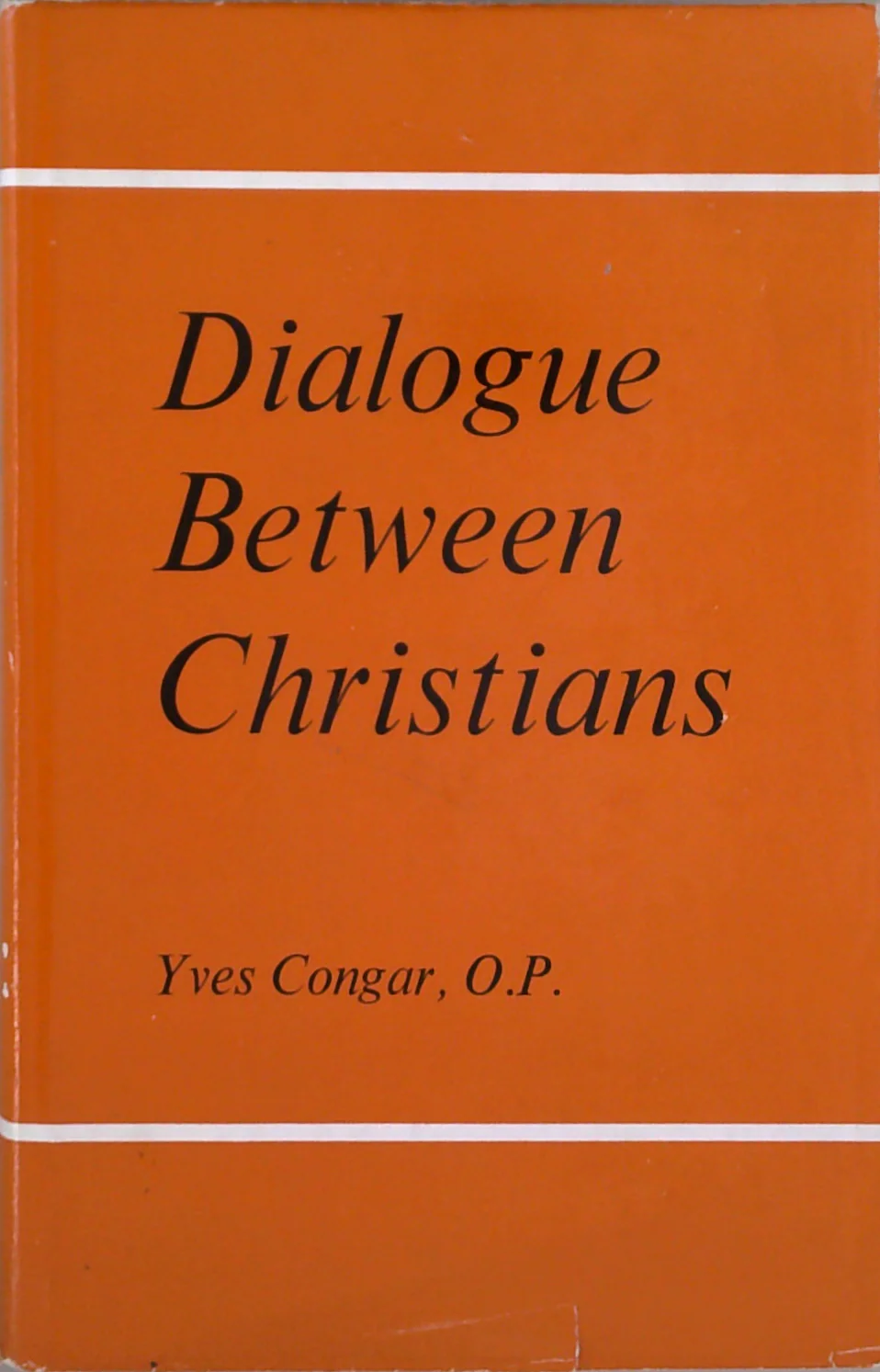
Dialogue Between Christians: Catholic Contributions To Ecumenism
Condition remarks:
Book: Good
Jacket: Chipped and worn with some minor damage
Pages: Good
Markings: Previous owner
A landmark work in twentieth-century ecumenical theology, Dialogue Between Christians: Catholic Contributions to Ecumenism presents the rigorous and deeply compassionate thinking of one of the most influential Catholic theologians of the modern era. Written in the years surrounding the Second Vatican Council, the text chronicles the Catholic Church's evolving engagement with Protestant and Orthodox traditions, arguing that genuine Christian unity demands honest theological conversation rather than mere doctrinal compromise. With scholarly precision and pastoral warmth, Congar details the historical, doctrinal, and spiritual dimensions of the ecumenical movement, situating Catholic thought within the broader Christian quest for reconciliation. The work stands as both a theological treatise and a call to action, illustrating how the Church's self-understanding must be enriched through encounter with other Christian communities. Essential reading for theologians, historians of religion, and anyone committed to the cause of Christian unity, it remains a foundational text in ecumenical studies.
Original: $51.14
-65%$51.14
$17.90Dialogue Between Christians: Catholic Contributions To Ecumenism
Condition remarks:
Book: Good
Jacket: Chipped and worn with some minor damage
Pages: Good
Markings: Previous owner
A landmark work in twentieth-century ecumenical theology, Dialogue Between Christians: Catholic Contributions to Ecumenism presents the rigorous and deeply compassionate thinking of one of the most influential Catholic theologians of the modern era. Written in the years surrounding the Second Vatican Council, the text chronicles the Catholic Church's evolving engagement with Protestant and Orthodox traditions, arguing that genuine Christian unity demands honest theological conversation rather than mere doctrinal compromise. With scholarly precision and pastoral warmth, Congar details the historical, doctrinal, and spiritual dimensions of the ecumenical movement, situating Catholic thought within the broader Christian quest for reconciliation. The work stands as both a theological treatise and a call to action, illustrating how the Church's self-understanding must be enriched through encounter with other Christian communities. Essential reading for theologians, historians of religion, and anyone committed to the cause of Christian unity, it remains a foundational text in ecumenical studies.
Product Information
Product Information
Shipping & Returns
Shipping & Returns
Description
Condition remarks:
Book: Good
Jacket: Chipped and worn with some minor damage
Pages: Good
Markings: Previous owner
A landmark work in twentieth-century ecumenical theology, Dialogue Between Christians: Catholic Contributions to Ecumenism presents the rigorous and deeply compassionate thinking of one of the most influential Catholic theologians of the modern era. Written in the years surrounding the Second Vatican Council, the text chronicles the Catholic Church's evolving engagement with Protestant and Orthodox traditions, arguing that genuine Christian unity demands honest theological conversation rather than mere doctrinal compromise. With scholarly precision and pastoral warmth, Congar details the historical, doctrinal, and spiritual dimensions of the ecumenical movement, situating Catholic thought within the broader Christian quest for reconciliation. The work stands as both a theological treatise and a call to action, illustrating how the Church's self-understanding must be enriched through encounter with other Christian communities. Essential reading for theologians, historians of religion, and anyone committed to the cause of Christian unity, it remains a foundational text in ecumenical studies.