Theatre In Soviet Russia
Condition remarks:
Book: Good
Jacket: Chipped and worn with some minor damage
Pages: Good , price clipped
Markings: No markings
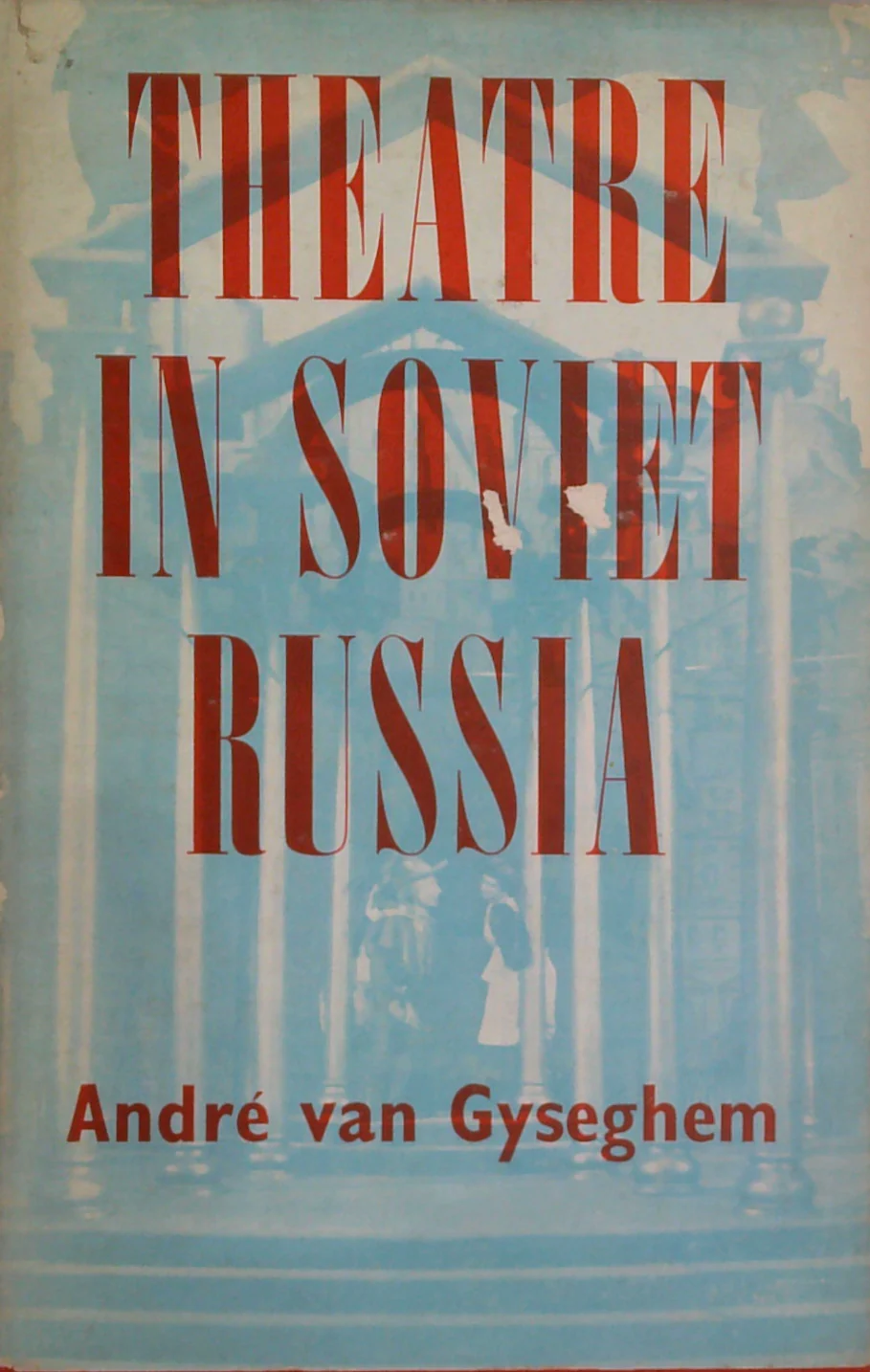
A landmark work in theatre history and criticism, Theatre in Soviet Russia chronicles the dramatic transformation of the Russian stage following the Bolshevik Revolution, offering a firsthand account from a Western theatre practitioner who witnessed the Soviet experiment up close. André van Gyseghem presents a vivid and authoritative survey of the major directors, companies, and theatrical movements that defined Soviet stagecraft in the 1930s, including the groundbreaking work of figures such as Stanislavski, Meyerhold, and Vakhtangov. Written with the enthusiasm of a true believer in theatre as a social force, the text argues that the Soviet model represented a bold and purposeful reimagining of drama's role in public life, placing art firmly in the service of the collective. Van Gyseghem details the organizational structures, training methods, and ideological frameworks that shaped productions across Moscow and Leningrad, giving readers an intimate portrait of a theatre culture unlike any other in the world. Essential reading for students of drama, performance history, and twentieth-century political culture, this account remains a rare and valuable document of a pivotal era in world theatre.
Original: $21.92
-65%$21.92
$7.67Theatre In Soviet Russia
Condition remarks:
Book: Good
Jacket: Chipped and worn with some minor damage
Pages: Good , price clipped
Markings: No markings
A landmark work in theatre history and criticism, Theatre in Soviet Russia chronicles the dramatic transformation of the Russian stage following the Bolshevik Revolution, offering a firsthand account from a Western theatre practitioner who witnessed the Soviet experiment up close. André van Gyseghem presents a vivid and authoritative survey of the major directors, companies, and theatrical movements that defined Soviet stagecraft in the 1930s, including the groundbreaking work of figures such as Stanislavski, Meyerhold, and Vakhtangov. Written with the enthusiasm of a true believer in theatre as a social force, the text argues that the Soviet model represented a bold and purposeful reimagining of drama's role in public life, placing art firmly in the service of the collective. Van Gyseghem details the organizational structures, training methods, and ideological frameworks that shaped productions across Moscow and Leningrad, giving readers an intimate portrait of a theatre culture unlike any other in the world. Essential reading for students of drama, performance history, and twentieth-century political culture, this account remains a rare and valuable document of a pivotal era in world theatre.
Product Information
Product Information
Shipping & Returns
Shipping & Returns
Description
Condition remarks:
Book: Good
Jacket: Chipped and worn with some minor damage
Pages: Good , price clipped
Markings: No markings
A landmark work in theatre history and criticism, Theatre in Soviet Russia chronicles the dramatic transformation of the Russian stage following the Bolshevik Revolution, offering a firsthand account from a Western theatre practitioner who witnessed the Soviet experiment up close. André van Gyseghem presents a vivid and authoritative survey of the major directors, companies, and theatrical movements that defined Soviet stagecraft in the 1930s, including the groundbreaking work of figures such as Stanislavski, Meyerhold, and Vakhtangov. Written with the enthusiasm of a true believer in theatre as a social force, the text argues that the Soviet model represented a bold and purposeful reimagining of drama's role in public life, placing art firmly in the service of the collective. Van Gyseghem details the organizational structures, training methods, and ideological frameworks that shaped productions across Moscow and Leningrad, giving readers an intimate portrait of a theatre culture unlike any other in the world. Essential reading for students of drama, performance history, and twentieth-century political culture, this account remains a rare and valuable document of a pivotal era in world theatre.